
Start with where the water comes from
Water enters a basement through a short list of routes. Rain runs down the roof into gutters that dump beside the foundation. Soil slopes toward the house instead of away. Groundwater rises after a wet spell and pushes through the floor-wall joint. Cracks in the wall let water through under pressure.
Each route has a different fix, and the fix sets the price. A downspout extension costs very little. A drain system along the footing costs far more. Paying for a drain when the real problem was a downspout wastes money, which is why a good contractor looks before quoting.
The three cost tiers
| Tier | What it solves | How the cost behaves |
|---|---|---|
| Gutters, downspouts and grading | Surface water near the wall | Lowest cost, often done first |
| Interior drain and sump pump | Groundwater and floor-wall seepage | Middle cost, scales with wall length |
| Exterior drain and waterproofing | Severe wall seepage | Highest cost, needs excavation |
| Crack injection or sealing | A single visible crack | Low to moderate, does not stop groundwater |
| A sealant brushed on a wall does not hold back groundwater pressure. Be wary of any quote that promises a bone-dry basement from paint alone. Ask what happens to water that gets past the surface. |
What pushes a quote up or down
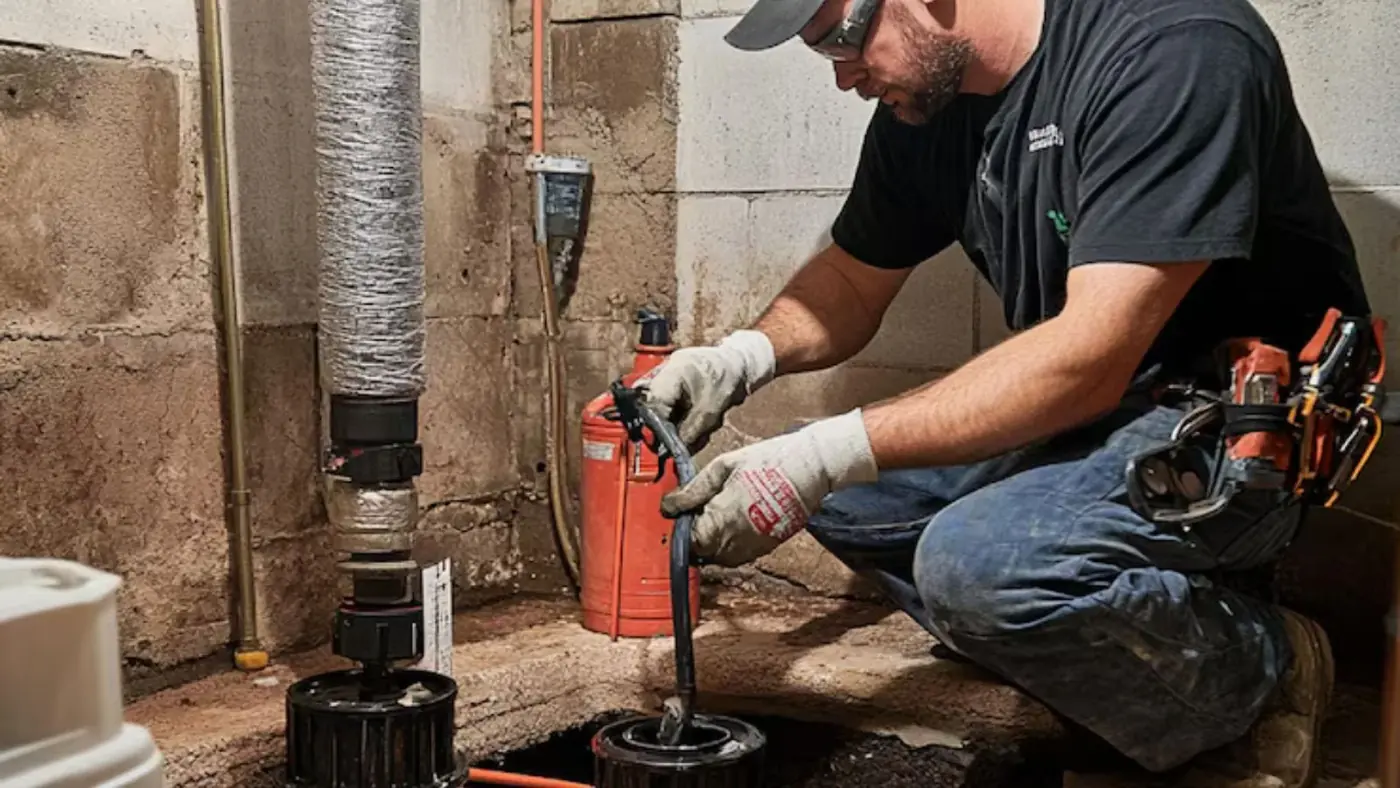
Perimeter length is the biggest factor for an interior drain, because the drain runs along the footing. A longer run means more cutting, more pipe and more gravel. The pump comes next. A basic submersible pump costs less than a high-capacity unit with a battery backup. Finish work matters too.
If the floor edge is cut open for the drain, it must be patched. If the basement is finished, drywall and flooring near the walls may need removal. Those costs are often listed separately from the plumbing, so read the line items. Access and discharge round out the list.
A pump needs a place to send water, and that place must follow the Village's rules. A discharge that needs a long run of buried pipe adds cost.
Questions to ask each contractor
Ask what causes the water in your basement and how they found out. Ask whether the plan includes a sump pump and a backup. Ask where the pump discharges. Ask for the quote in writing, with finish work listed. Ask whether the contractor is licensed and bonded with the Village, because that is a condition of the permit.
Get at least two quotes. If one is far lower, find out what it leaves out. A plan that omits the pump or the discharge is not comparable to one that includes them.
Glendale Heights rules that affect your waterproofing plan
The Village publishes a sump pump brochure that sets out how a pump must discharge. It says a sump pump may not discharge into a sanitary sewer. It also says water may not be sent onto a neighbor's property or onto a street or public way.
Where a footing drain sits near a storm sewer, the brochure says it must connect to the storm system, and near a retention pond the Village may require discharge into the pond.
The brochure also says a permit is required before installing a new sump pit or draintile. The application asks for a drawing of the pit location, material specifications and the contractor's name and address, and it says contractors must be licensed and bonded with the Village before permits are issued.
A homeowners association letter may be required, and an electrical permit may apply. The Community Development office at (630) 260-6030 answers specific questions, since the brochure is general information and not an interpretation of the code.
What you can do before calling anyone
Clean the gutters and extend each downspout several feet from the wall. Check that the soil slopes away from the house. Watch where water appears during a heavy rain and take photos. Note whether it comes in at one corner, along a wall or up through the floor. That record helps the contractor choose the right fix.
It also lets you compare quotes against the real cause instead of a sales pitch.
When the sump pump is the weak point
Many wet basements already have a pump, and the pump is the problem. An old or undersized pump cannot keep up in a storm. Replacing it before the next rainy season costs less than a flooded basement.
Our sump pump installation and repair team covers pumps, check valves and backups, and our basement waterproofing page explains the full approach.
Insurance and cost
Seepage and groundwater are usually excluded from a standard homeowner's policy. Water backup coverage is often a separate endorsement, so read your policy before the next storm. Waterproofing is a home improvement, not a claim. Keep the invoice and the permit record, because they support the home's value when you sell.
Neighbors with the same question
Homeowners in Bloomingdale and Carol Stream ask us the same thing, and the answer follows the same pattern. Find the cause, fix the cheap causes first and install a drain and pump where groundwater is the real problem.
A simple way to compare quotes
Write the quotes side by side. List the cause each one claims, the work it includes, the pump size, the backup, the discharge, the permit and the finish work. A quote that leaves out several of those items is not a lower price. It is a smaller job.
Basement waterproofing cost questions
Extend the downspouts, clean the gutters and fix the grading. Those steps address surface water and often help a great deal.
The Village brochure says a permit is required before installing a new sump pit or draintile. Call Community Development at (630) 260-6030 to confirm your case.
No. The Village brochure says a sump pump may not discharge into a sanitary sewer.
If your basement floods when the power fails, yes. Storms often cut power at the worst moment.
One may include a drain, a pump, a backup and finish work while the other covers only a sealant. Compare line by line.
Usually not. Sudden damage may be covered, and water backup is often a separate add-on.