
When a leak is an emergency
Water running inside a wall, ceiling or floor is urgent even when you cannot see it. A sagging ceiling, a warm spot on the floor or the sound of water with every tap closed means the leak is active. Close the main shutoff and call. A slow leak is less dramatic and still costly.
A damp baseboard or musty smell can mean water has been getting in for weeks, and mold follows damp materials. Call at any hour. The dispatcher books the next open plumber and tells you what to do while you wait.
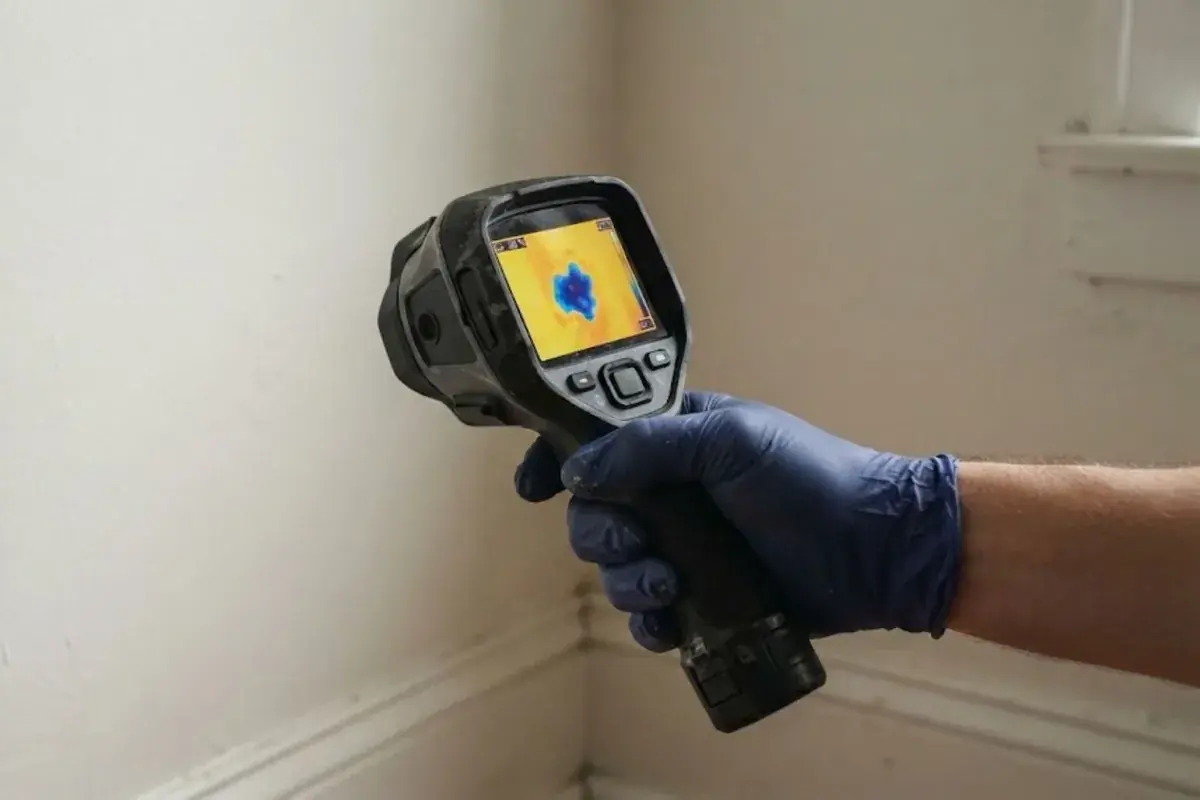
How we find a leak without opening the wall
| Tool | What it detects | Best use |
|---|---|---|
| Thermal imaging camera | Temperature differences from wet material | Walls, ceilings and under floors |
| Acoustic listening gear | The sound of pressurized water escaping | Slab and underground supply lines |
| Pressure test | Whether the system holds pressure | Confirming a leak exists in a section |
| Meter check | Water moving with every fixture off | Proving a hidden leak and sizing it |
| Camera inspection | Cracks and breaks in drain lines | Drain leaks and slow seepage |
| We start with the meter, because it tells us whether the leak is on the pressurized side. Then we narrow it with listening gear and imaging. Only when we know where the water is do we cut, so the opening is small and the repair is aimed. |
High bills and meters
A high water bill with no obvious reason is a leak until proven otherwise. A running toilet can waste a surprising amount of water without a drip you can see. Try the dye test, a few drops of food coloring in the tank, and look for color in the bowl after 15 minutes.
If the toilet is fine, check the meter. Close every fixture and see whether the dial or the small leak indicator still moves. If it does, the leak is somewhere in your lines, in the house or between the meter and the house. The water service line page covers the buried section.
Slab leaks and older homes
Most homes in Glendale Heights date from the late 1950s onward, and some sit on slabs. A slab leak happens when a copper line under the slab pinholes or splits. A warm floor, a hissing sound or a damp carpet edge with no source overhead are signs.
Our plumber confirms the leak with listening gear and then explains the options. Re-routing a line overhead often beats breaking the slab, and a full repiping makes sense when the same pipe keeps failing. We lay out each path with a clear price before work starts.
What affects the cost of leak detection and repair
- Detection visit. Finding the leak is priced on its own, so you know what is wrong before repair is quoted.
- Location of the leak. A pipe in an open basement is simpler than one behind tile.
- Repair method. A section repair, a re-route and a repipe are very different jobs.
- Finish work. Drywall, paint and flooring after the opening are not always part of the plumbing price.
Many homeowner's policies cover water damage from a sudden leak but not the cost of finding it or fixing a slowly leaking pipe. Ask your insurer before you decide, and keep every photo and receipt.
Hidden leak or bill spike? Call, and a plumber can trace it today.
☎ (630) 822-9290What you can do before we arrive
Shut off the main if water is visibly spreading. Move furniture and rugs off the wet area. Take photos with the date visible. Do not cut into the wall yourself, because that can spread the damage and make the leak harder to find. For a visible burst, burst pipe repair is the faster path.
If the leak is on a drain line instead of a supply line, tell us, because a camera is the right tool for that case.
Standards and sources for this job
Locating a leak uses a meter test, listening gear and thermal imaging, and repairing it falls under the Illinois Plumbing Code. For questions about lead from service lines and home plumbing, the Village's 2024 water quality report directs residents to Public Works at (630) 260-6040.
Leak detection questions from Glendale Heights homeowners
Yes. The line is answered 24/7. If water is spreading, close the main and call so the dispatcher books the next open plumber.
We use a meter check, listening gear and a thermal camera to narrow the source. We open the wall only after we know where the water is.
A warm spot on the floor, the sound of running water with fixtures off or a rising bill without another cause are common signs.
Yes. A silent leak from tank to bowl can waste water all day. A dye test shows it, and the repair is usually inexpensive.
Often it does not pay for finding or fixing a slow leak, but may cover damage from a sudden one. Check your policy.
We work in Glendale Heights, ZIP 60139, and in the nearby ZIPs and towns on the service area page.
Yes. We tell you what we found and quote the repair, and nothing opens until you approve.