
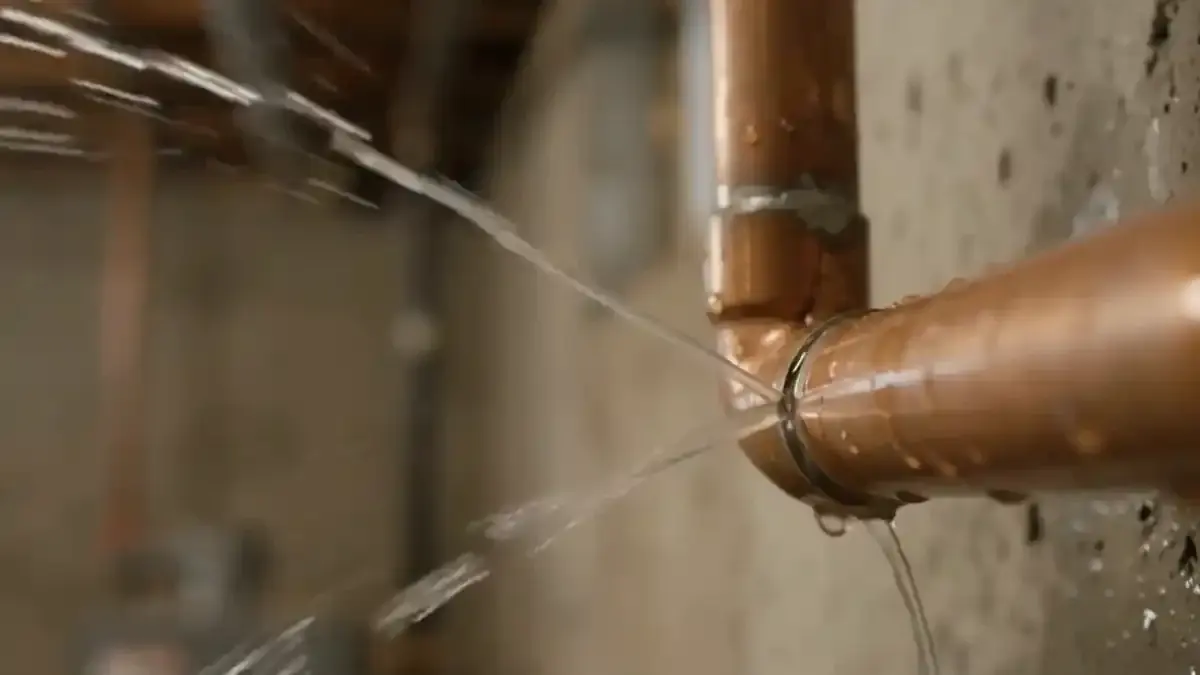
When a burst pipe is an emergency
Almost every burst pipe is an emergency, because the water does not stop until the supply is closed. A pinhole spray from a copper elbow can still wet a finished ceiling in an hour. A split in a line feeding an upstairs bathroom can drop through two floors before anyone notices.
The main shutoff is the first tool you own. In most Glendale Heights homes it sits where the water line enters the basement, close to the meter. Turn the handle clockwise until it stops. If the valve will not move, call us at once and say so, because a stuck main valve changes what the plumber brings.
Call at any hour. Nights, weekends and holidays are normal hours for burst pipes, so the line is answered around the clock and the dispatcher books the next open plumber.
Do these steps before the plumber arrives
What actually causes pipes to fail in homes like these
Glendale Heights grew mostly from the late 1950s onward, so many homes carry supply lines installed decades ago. Water here is moderately hard. The DuPage Water Commission describes its supply as about 8 grains per gallon, and scale and age together can leave older fittings brittle at the joints. The other big cause is winter.
A line along an exterior wall, in a crawlspace or in an unheated garage can freeze, swell and split. The split often shows only after the thaw, when pressure returns and the water starts moving.
A frozen line that has not yet burst should be thawed gently and checked, and our plumber can advise on that over the phone. Past repairs matter too. A pinhole in one section of old copper often means the neighboring sections are thinning.
We tell you what we see, including when a repair will hold and when repiping a run makes more sense.
How a burst pipe repair works
| Failure | Typical fix | What decides the price |
|---|---|---|
| Split in straight copper | Cut out the damaged section and sweat in new copper | Access, pipe size and how far the damage runs |
| Failed fitting or joint | Replace the fitting and test pressure | Whether the neighboring joints are sound |
| Frozen and split line | Thaw, replace the section and add protection | Location of the line and how much wall must open |
| Plastic line crack | Cut and couple with proper fittings | Pipe type and whether the system is mixed |
| Repeated failures in one run | Replace the whole run | Length of the run and the finish work after |
| A plumber diagnoses first and gives you a clear price before cutting anything. If the scope grows once the wall is open, we stop and talk before continuing. |
Finding the leak you cannot see
Some bursts are hidden. A stain on a ceiling, a damp baseboard or a meter that keeps turning with every tap closed points to a leak inside a wall or under the slab. In that case leak detection finds the source with thermal imaging and acoustic gear, which keeps the opened area small and the repair cost down.
If the failed pipe is outside the house, between the street and the meter, the repair belongs on the water service line page instead. We handle both, and the first call sorts it out.
What affects the cost of burst pipe repair
- Access. A pipe under an open basement ceiling is quick. One behind finished drywall or tile adds time and finish work.
- Pipe material and size. Copper, PEX and older steel each use different fittings and methods.
- Scope. One section is a small job. A whole run is a larger one, and we explain the difference before starting.
- Hour of the call. After-hours work is dispatched the same way, and the price is still agreed before the work begins.
Water damage to floors, walls and belongings may fall under your homeowner's policy, while the pipe itself usually does not. Ask your insurer before you decide, and keep photos and receipts.
Burst pipe or fast leak? Call now and shut the main while you talk.
☎ (630) 822-9290After the repair
Once the pipe is fixed, the water-damaged area still needs attention. Wet drywall and insulation should be dried quickly, because damp materials left in a wall invite mold. Ask your insurer whether a restoration company should be involved, and keep every receipt. We can also check the rest of the system.
High pressure shortens the life of pipes and fittings, so a quick pressure reading is worth taking. If the house is a candidate for new fixtures or valves, a repair visit is a good time to plan them. Bloomingdale and nearby neighbors call us for the same reason.
Standards and sources for this job
Pipe repair in Illinois follows the Illinois Plumbing Code, which the Illinois Department of Public Health lists under Title 77 of the Illinois Administrative Code. The work must be done by a plumber licensed under the Illinois Plumbing License Law, 225 ILCS 320.
Burst pipe questions from Glendale Heights homeowners
Yes. The line is answered 24/7, including nights, weekends and holidays. Call, say what is happening and the dispatcher books the next open plumber.
Close the main shutoff valve by turning it clockwise. Then open a faucet on the lowest floor to drain the lines, keep clear of wet electrical areas and call us.
A single accessible section is often repaired in a visit. Hidden pipes, frozen runs and larger damage take longer, and the plumber tells you the plan before work starts.
Policies differ. Water damage to the home is often covered when a pipe bursts suddenly, but the pipe repair itself often is not. Call your insurer and keep photos.
Not yet. A frozen pipe has not split, but it is at risk. Keep the water off to that line and call before heating it with anything that could start a fire.
We serve 60139 and the neighboring ZIPs 60108, 60137 and 60188, plus nearby towns on the service area page.
A plumber needs to see the break first, because access and pipe type change the work. You get a clear price on site before any cutting starts.