
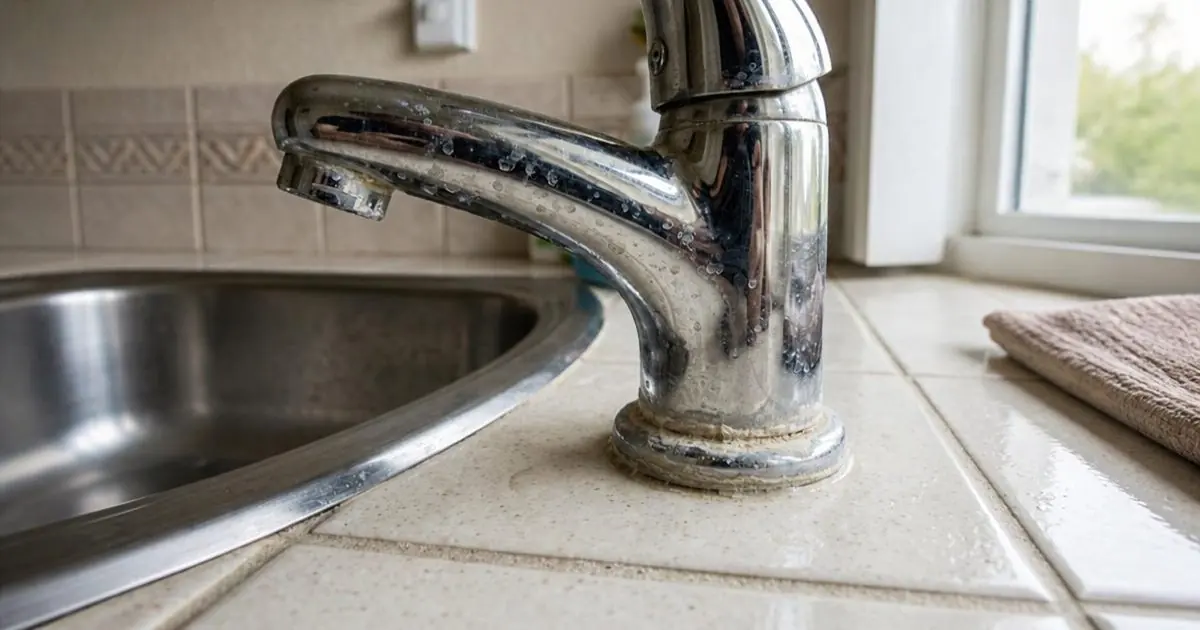
What the water here contains
The Village of Glendale Heights buys Lake Michigan water from the DuPage Water Commission, which gets it from the City of Chicago. The Village says it adds no chemicals to that water. The Commission describes the supply as about 8 grains per gallon, or about 137 mg/L as calcium carbonate, which falls in the moderately hard range.
That hardness is a mineral content issue, not a safety issue. It leaves scale in water heaters, on faucet aerators, on showerheads and as spots on glass. The Village directs residents with questions about their own tap to Public Works at (630) 260-6040.
Soft or filtered
| Option | What it does | What it does not do |
|---|---|---|
| Salt-based softener | Removes calcium and magnesium that cause scale | Does not filter chlorine or most contaminants |
| Whole-house sediment filter | Catches particles | Does not soften |
| Carbon filter | Reduces taste and odor | Does not remove hardness |
| Under-sink drinking filter | Improves drinking water at one tap | Does not protect heater or fixtures |
| Reverse osmosis at the sink | Reduces many dissolved solids at one tap | Does not treat the whole house |
| A softener protects pipes, heaters and fixtures from scale, and it makes soap lather more easily. A filter targets taste, odor or particles. Many households need one or the other, not both. We explain each so you buy what solves your problem. |
Is a softener worth it here
At about 8 grains per gallon, a softener is a comfort and maintenance choice, not a necessity. A tank water heater lasts longer when scale is controlled, and tankless units benefit most, since scale narrows their heat exchangers. If you have a tankless unit, see tankless water heater for why the annual flush matters either way.
There are costs. A salt softener needs salt, produces brine discharge and has rules about where the brine goes. Some households prefer not to add sodium to drinking water, and a bypass tap for cooking and drinking is a common answer. We help you decide.
Install and service
A softener goes on the main line after the meter and before the water heater, so every hot and cold tap gets treated water. We install a bypass valve, a drain connection for regeneration and a hose bib for the garden if you want hard water outside.
The unit needs a power outlet and a floor drain or standpipe nearby. After installation, we set the hardness and the regeneration schedule using the local supply as a guide. Check the salt level monthly and clean the brine tank once a year. Annual service is a good habit.
What affects the cost of a softener or filter
- Type and capacity. Larger households need larger units.
- Installation work. Supply, drain and electrical connections vary by house.
- Water test. A test of your tap tells us whether a filter is needed.
- Ongoing costs. Salt and filter changes are regular expenses.
Water treatment equipment is a home improvement, not an insurance matter. Keep the receipts and the service records.
Want to talk about scale and water quality? Call and a plumber will advise you.
☎ (630) 822-9290Honest limits
A softener does not make water safe or treat lead. It does not remove bacteria. If you are worried about lead from an older service line or interior plumbing, ask Public Works at (630) 260-6040 about testing, and consider water line replacement if the line is lead.
If scale has already damaged a water heater, water heater replacement is the right fix, followed by softening to protect the new unit. Wheaton and other neighbors ask us about the same decision.
What to do before you choose water treatment equipment
- Test your tap so you know what you are treating before you buy
- Ask Public Works at (630) 260-6040 about lead testing if you have concerns
- Keep a bypass for any tap used for cooking or drinking if sodium matters to you
- Ask your physician before using softened water as your main drinking source
- Plan the drain and power outlet before the unit is delivered
Standards and sources for this job
The hardness figure comes from the DuPage Water Commission's water FAQ, about 8 grains per gallon or 137 mg/L as calcium carbonate. The same FAQ says ion exchange units suit the main incoming line, and advises consulting a physician before using softened water as your main drinking source.
Water softener and filtration questions
The DuPage Water Commission describes its supply as about 8 grains per gallon, or about 137 mg/L as calcium carbonate, which is moderately hard.
The Village states it adds no chemicals to the Lake Michigan water it buys from the DuPage Water Commission.
It is optional. A softener reduces scale and protects heaters and fixtures, and many households find it worthwhile.
No. Ask Public Works at (630) 260-6040 about testing if you are concerned.
Softened water adds a small amount of sodium. A bypass tap at the kitchen sink is a common choice.
Across Glendale Heights, including 60139, and the nearby ZIPs and towns on the service area page.
Yes. After checking your house and water, the plumber states the price, and work begins after you approve it.